

Allergies can be part of the confusing world of health mysteries.
Can a nickel allergy really appear out of nowhere?
Spoiler: It can seem that way—but there’s usually more going on beneath the surface.
A nickel allergy happens when your immune system becomes sensitized to nickel and later reacts when you’re exposed again. The result can be an itchy, uncomfortable rash, usually where the nickel has contacted your skin. The tricky part? Nickel is everywhere—from jewelry and watches to coins, belt buckles, eyeglasses and electronics—so exposure can be surprisingly easy to miss.
There’s a widespread misconception that allergies simply strike overnight. In reality, an adult can become sensitized after years of exposure and only notice a reaction much later. It’s not necessarily about waking up one day unable to wear your favorite watch—your immune system may have been quietly building a response long before you noticed the symptoms.
Real talk: even if you’ve worn the same earrings, belt or watch for years without a problem, a nickel allergy can still show up later in life.
Each piece of this puzzle requires a little detective work. Identifying the possible trigger, recognizing the symptoms and understanding how your body reacts can help make a seemingly mysterious reaction a lot less mysterious.
The good news? Once you understand the process, you can start taking steps to reduce those unwanted nickel surprises.
The Science Behind Sudden Nickel Sensitization
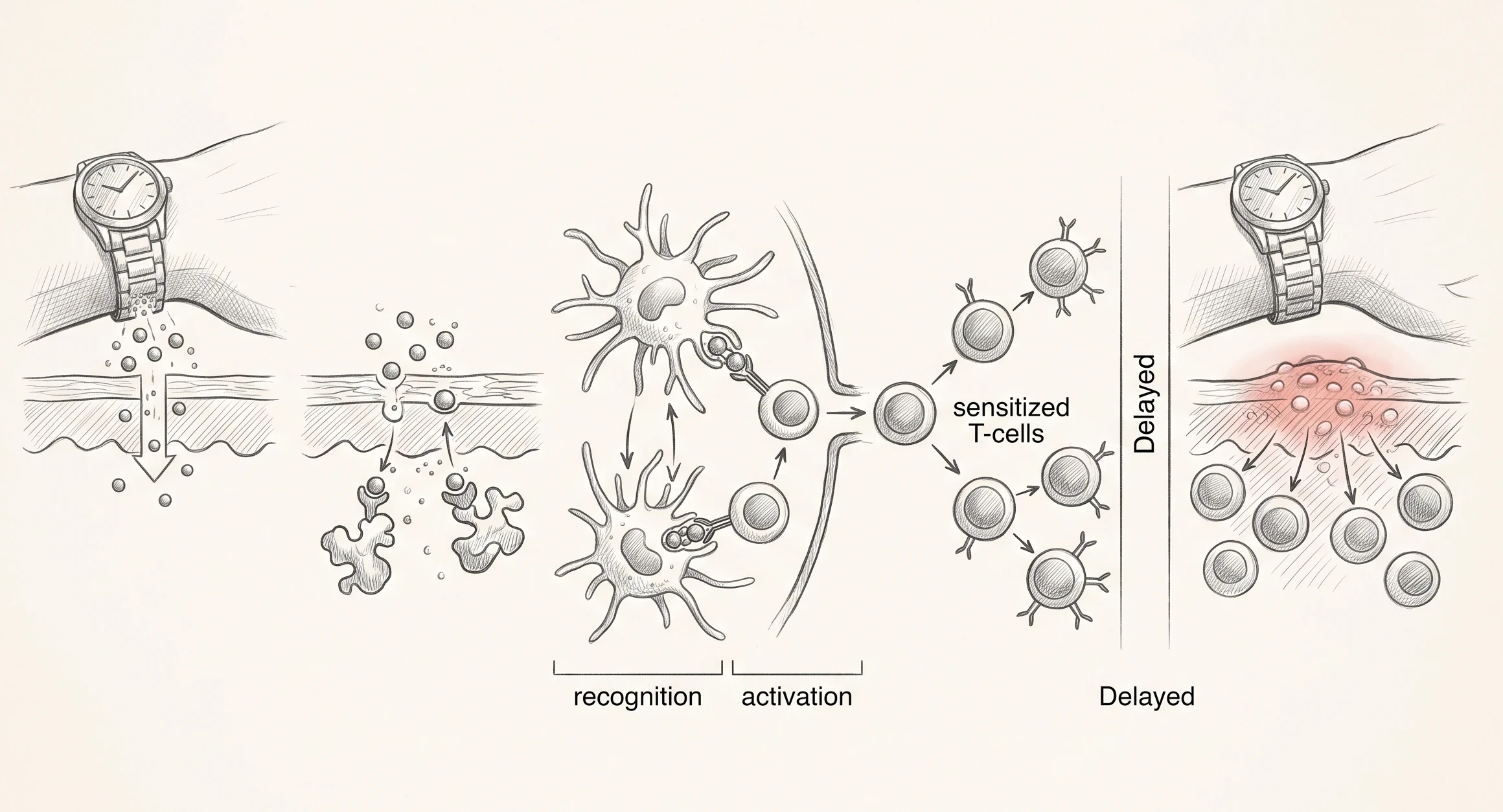
Nickel exposure → skin → immune cells → T-cell sensitization → repeat exposure → inflammation
Navigating the world of allergies can sometimes feel like cracking a complicated code. The mystery begins with immune sensitization—the stage when your body first encounters nickel and learns to recognize it as something it doesn’t like.
The important part is that sensitization may happen without an obvious rash. Your immune system can essentially be taking notes in the background, preparing to respond differently the next time nickel comes into contact with your skin.
The First Encounter
The initial exposure isn’t always obvious.
Maybe it’s that beloved watch you’ve worn for years. Perhaps it’s the metal button on your jeans, a pair of earrings or another everyday item that regularly touches your skin.
Nickel can interact with proteins in the skin, allowing specialized immune cells to process the nickel-related complexes and present them to T-cells. The T-cells can then become sensitized to nickel.
Your immune system has essentially tagged nickel as an unwanted guest.
And you might not even know it’s happening.
The Repeat Exposure
Here’s where things get interesting.
After sensitization has occurred, another exposure to nickel can activate those previously sensitized T-cells. They release chemical messengers called cytokines, which help attract other immune cells to the area.
The result?
Redness. Itching. Swelling. Sometimes blisters or dry, cracked skin.
And because this is a delayed hypersensitivity reaction, the rash doesn’t necessarily appear immediately. Symptoms can take 24–72 hours to develop.
So that rash you noticed today?
The culprit could have been something you touched yesterday—or even the day before.
Late-onset nickel allergies may therefore seem sudden, but the immune sensitization behind them can have a much longer backstory.
That’s what makes nickel allergy so frustrating: the reaction can feel instant to you, even though the process behind it may have been building quietly for a long time.
Lifestyle and Environmental Triggers: What Role Do They Play?
Nickel is a bit of a metal ninja, quietly slipping into everyday life through objects you may never think twice about.
Your watch.
Your phone.
Your eyeglasses.
Your belt buckle.
Your keys.
Your jewelry.
Even some clothing fasteners can put nickel-containing metal against your skin.
Consistent or repeated exposure can become particularly important for someone who has already become sensitized.
Modern life makes completely avoiding nickel difficult—but awareness is power.
Start paying attention to the objects that regularly touch your skin. If you keep experiencing irritation in the same area, look at what’s making contact there.
Sometimes the answer is hiding in plain sight.
Environmental conditions can also influence how your skin reacts. Too warm, too hot? Sweat, heat, friction and damaged skin barriers can make contact with irritating substances more troublesome and may increase the amount of exposure your skin experiences.
That doesn’t mean every flare-up is caused by nickel. Other metals, soaps, cosmetics, detergents and skin conditions can produce similar symptoms—which is one reason identifying the actual trigger matters.
What Can You Do If You Suspect Nickel Allergy?
Don’t panic. There are practical ways to reduce exposure.
Start with the items that spend the most time against your skin.
Try switching jewelry to verified nickel-free alternatives, using protective barriers between your skin and metal surfaces, and choosing materials such as titanium or niobium when appropriate.
For stainless steel, don’t automatically assume that “surgical grade” means nickel-free. Some stainless-steel alloys contain nickel, so checking the specific material and your own tolerance is important.
If you continue experiencing reactions, a dermatologist or allergist can help determine whether nickel is actually responsible. Patch testing is commonly used to identify nickel allergy and other contact allergens.
And once you know your triggers, managing them becomes much easier.
Treatments can also help calm symptoms during a flare-up. Depending on the severity, healthcare professionals may recommend topical corticosteroids or other treatments to reduce inflammation and itching.
The goal isn’t to live in fear of every piece of metal.
It’s to figure out what your skin doesn’t like—and make smarter choices around it.
So, Can Nickel Allergy Really Appear Suddenly?
Yes—but “suddenly” doesn’t necessarily mean your body became allergic overnight.
You may have been exposed to nickel many times before becoming sensitized. Once your immune system recognizes nickel as a trigger, a later exposure can produce a noticeable reaction that seems to come out of nowhere.
That’s why recognizing patterns can be so useful.
The watch you’ve worn for years.
The earrings you’ve always loved.
The belt buckle you’ve never thought about.
Sometimes the problem isn’t necessarily the new item.
It’s an old item your immune system has finally decided it doesn’t like anymore.
Have you noticed a reaction to something you’ve been wearing or using for years?
Hi, Drew! Could patch testing identify whether the reaction is truly nickel, or distinguish it from other common triggers such as fragrances, preservatives, cobalt, or irritation from sweat and friction? Since the rash can show up a day or two after contact, is it helpful to keep a brief log of jewelry, clothing hardware, devices, skincare products, and activities before an outbreak?
I’m also wondering whether a protective coating on a frequently used item, such as a watch back or belt buckle, can serve as a reliable short-term test before replacing it with a verified nickel-free option. That kind of practical troubleshooting could help pinpoint the cause without unnecessarily discarding every metal item at once.
Hi Aly, Patch testing are mainly for the nickel detection and some metals, but wont really give suitable info for fragrances or preservatives. Sweating with friction are unique because they can open the doorway for a potential irritant to come knocking – if possible wait a few hours to see if the reaction is still there and to retrace your steps for the root cause. As for protective coatings – they’re a great way to add to safeguard items you like and see if they trigger any reactions. The key to remember is coatings can wear off if placed in and around excessive heat or undergo immense – so you’ll need to reapply.